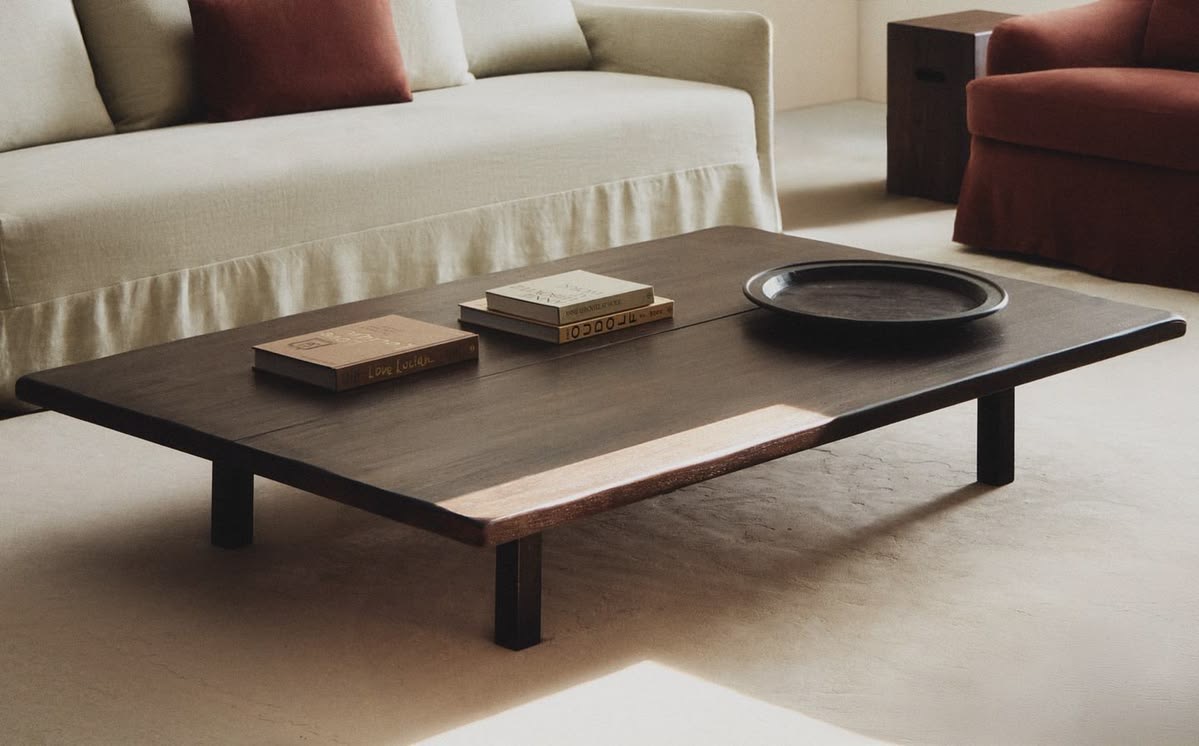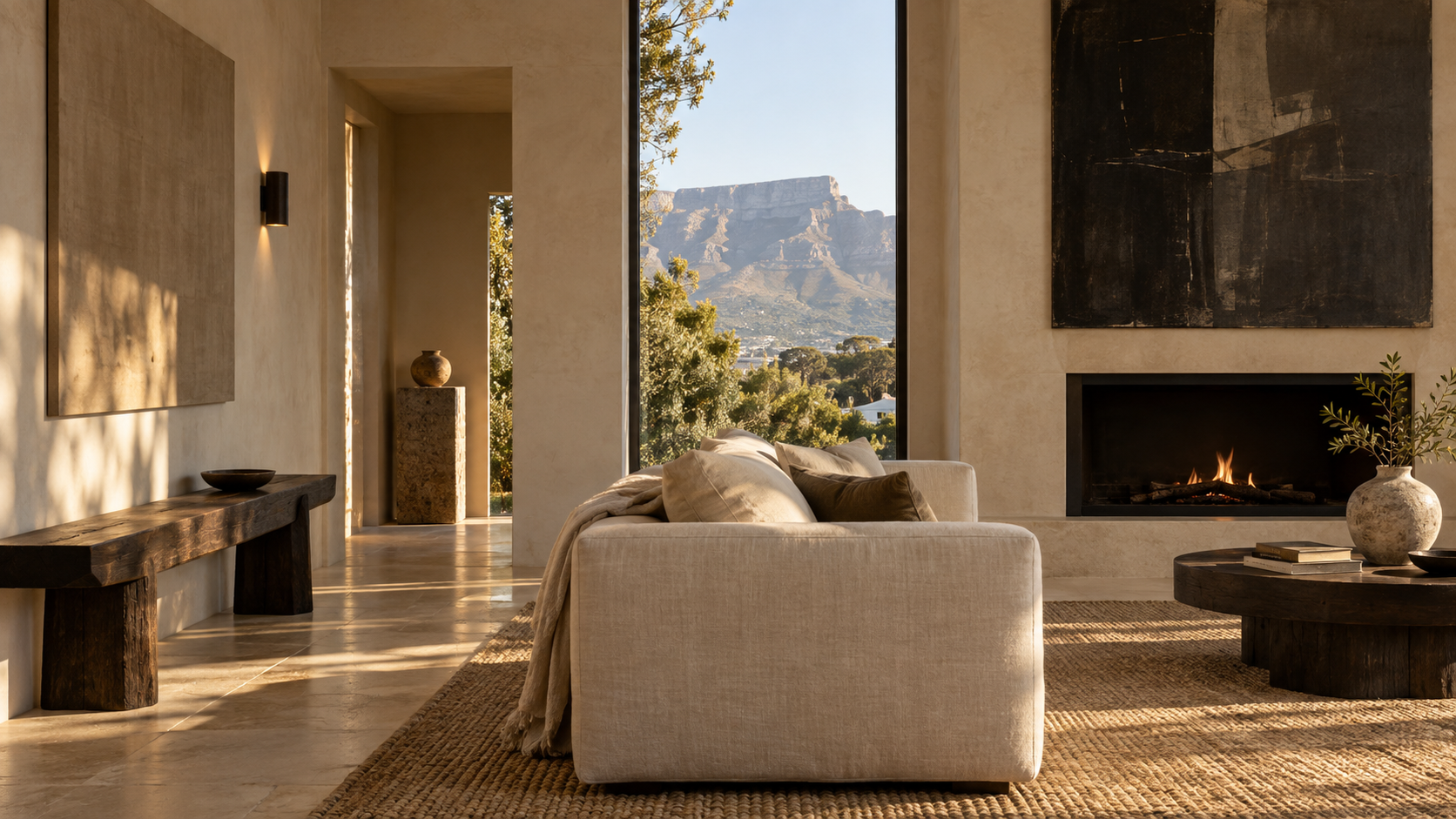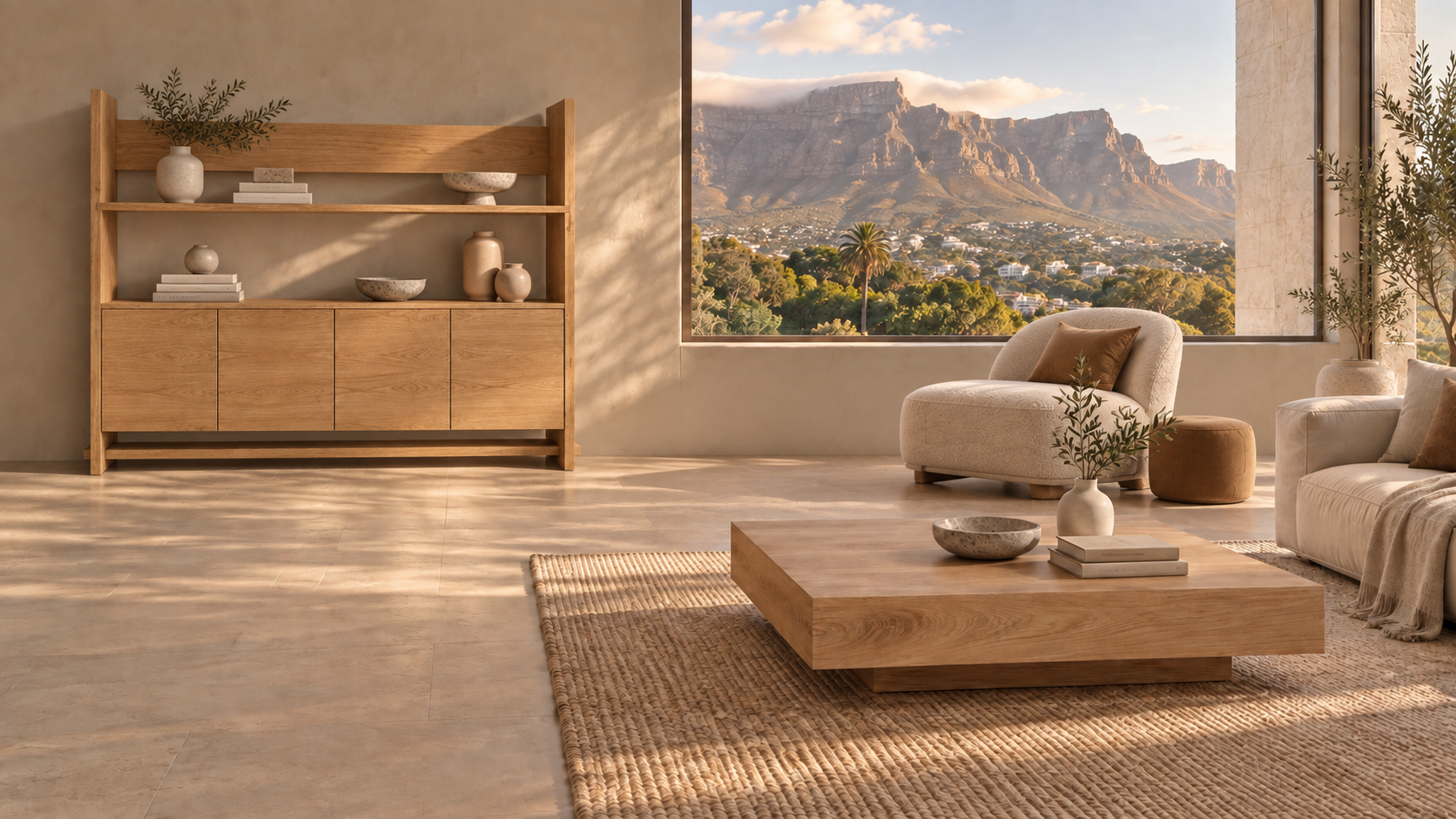
The coffee table occupies a surprisingly demanding position. It needs to be close enough for a cup, low enough to sit comfortably beside a sofa and substantial enough to belong in the seating group. It is also directly in the path of feet, visitors and everyday life. Rather than choosing it as a smaller version of the dining table, consider the particular space between the seats.
Measure the sofa as you use it
Begin with the usable seating length, the seat height and the depth of the sofa. Wide arms can make a sofa look long while leaving a comparatively short area where people actually sit. A chaise changes the open floor shape again. Measure the space in front of the seats, not just the overall width printed on the sofa specification.
A table somewhere around half to two-thirds of a straight sofa’s overall length is a useful visual test, not a rule to follow regardless of the room. A deep sectional may call for a square table or two smaller surfaces. A compact sofa with generous arms may suit a shorter table. Draw the candidate shape into the actual space before committing to a proportion.
Keep the everyday reach comfortable
Try an initial gap of about 350–450 mm between the sofa front and the coffee table. Sit down, stand up and reach for a cup without leaning far forward. The right gap depends on the depth of the seat, the table height and the people using it. This small space is for access to the sofa; it should not be confused with a main route through the room.
Where a regular walkway passes the seating group, plan more generously, often around 900 mm as a starting point, and test any particular mobility needs. If the table forces someone to turn sideways every time they cross the lounge, reduce its depth or move the whole group. Shifting it a few centimetres away from the sofa will not solve a fundamentally crowded layout.
Compare heights before comparing finishes
A tabletop near the sofa’s seat height, or a little below it, often feels easy to use. A very low sculptural table can be visually beautiful but less convenient for someone who does not want to bend to pick up a drink. Measure the seat where it is normally occupied, allowing for cushion compression, rather than using the backrest as your reference.
Build a temporary surface at the proposed height using a stable box and try it beside the sofa. You are checking a movement as much as a measurement. If the living room doubles as a place to eat or work, a coffee table may not be the most comfortable surface for that task. A small side table can sometimes meet that need without changing the centre of the room.
Choose a shape that follows movement
A rectangular table can serve a long sofa efficiently, while a square form often suits a deeper conversation group. Curved edges can make a tight route feel less abrupt and remove projecting corners, but a round table still occupies real floor area. Compare its full diameter with the clearance you need, especially beside a chaise.
Two smaller tables offer flexibility when visitors arrive, though they also introduce extra edges and legs. Think about who will move them and where the second table will go. A heavy solid timber piece is usually better treated as a permanent part of the arrangement than as something to shift several times a day.
Leave room for use, not only display
Consider what the surface holds on an ordinary evening. A book and a bowl may be enough; a large arrangement that leaves nowhere for two mugs is working against the table. If remotes and chargers are persistent visitors, an open shelf or nearby closed storage may be more useful than increasing the tabletop size.
The table’s visual weight matters too. A thick oak slab can give a soft upholstered room a welcome centre. In a room already filled with substantial cabinets, a more open base may provide relief. Use trays and coasters appropriate to the finish, and ask the maker about care before treating any timber surface as resistant to heat or standing water.
Choose alongside the sofa
VanSoul’s coffee tables offer different relationships between surface, storage and base. Compare a favourite form with your sofa measurements and a taped floor outline, then let the room determine the final scale.
Explore coffee tables